
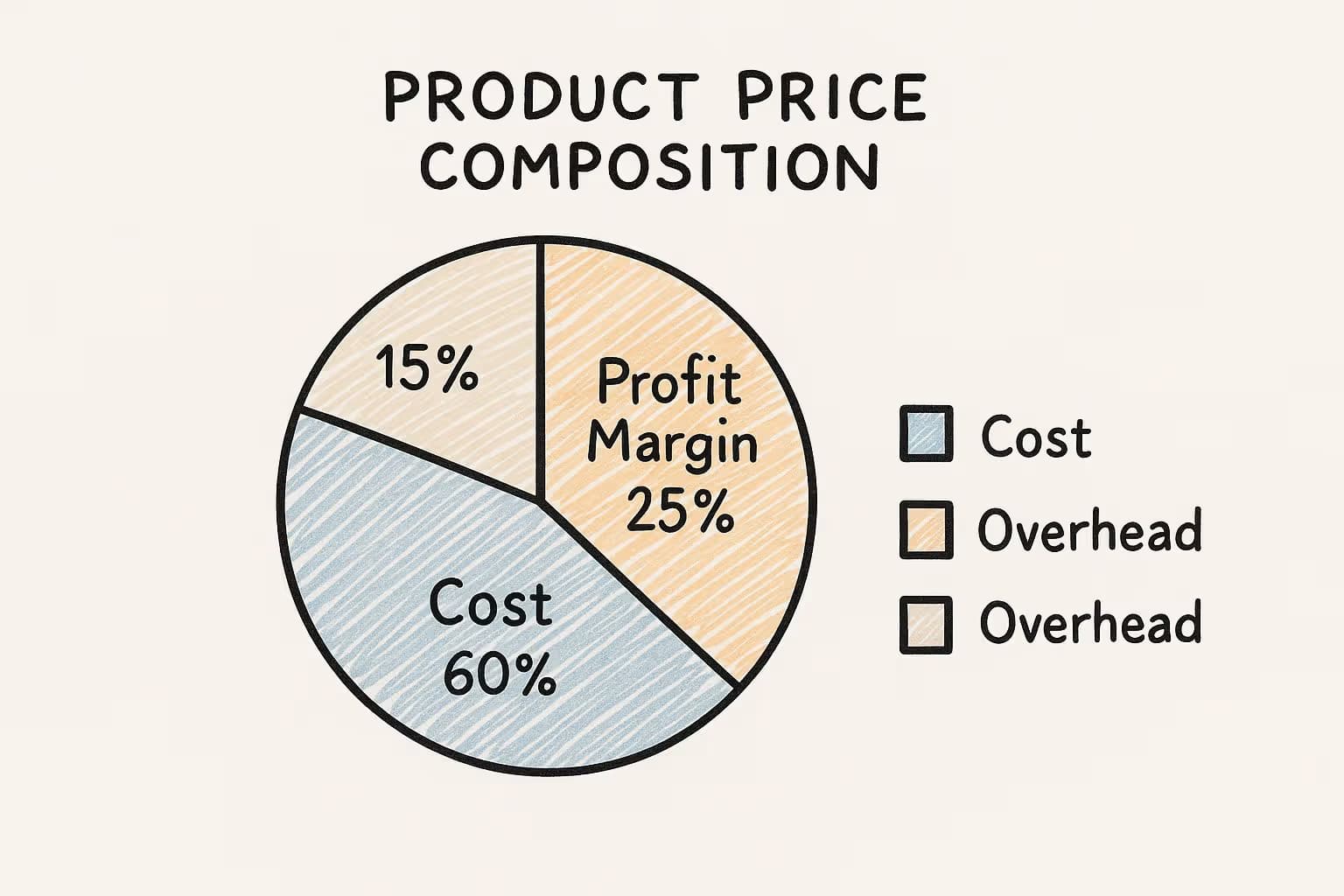
How to Price a Dish: Cost + Margin + Psychology
Once you know your numbers, pricing becomes a craft — not a guess. This is where you combine ingredient cost, labor reality, and a margin goal, plus the psychology of anchors, a “good/better/best” structure, and how guests actually read a menu. The goal isn’t to be expensive; it’s to be clear and confident, so customers feel comfortable ordering higher-margin choices.
If your costing still isn’t solid, start with the foundation first: Food Cost Percentage Explained (and what to aim for). Pricing strategies only work when your base numbers are real — otherwise you’re just decorating guesswork.
Pricing is only “smart” if the plate cost is stable. That means every dish needs a standard recipe with measurable portions — grams, ml, pieces — not “a handful” or “a spoon.” If your line cooks portion differently, your profit changes without you noticing, and you’ll blame “slow sales” when the problem is actually inconsistent production.
A useful operator-level overview of how restaurants approach pricing (and why item costing matters) is explained in NetSuite’s restaurant menu pricing guide, which frames pricing as a mix of cost control and strategic positioning. Once your plate cost is stable, you can adjust prices with confidence instead of fear.
Portion accuracy is the easiest way to stop cost drift. If you want the operational side of that, read Portion Control: The Hidden Key to Better Profit — because “pricing” and “portioning” are the same problem in different clothes.
Most restaurants price using a food-cost target (“I want 30% food cost”), but the best decisions come from using two lenses at the same time:
Food cost % per dish keeps you from selling items that are structurally too expensive.Food Cost % = (Item cost ÷ Menu price) × 100
Contribution margin ($) tells you what the dish actually contributes to paying rent, labor, and profit.Contribution margin = Menu price − Item cost
If you want a practical, merchant-friendly explanation of contribution margin in the context of menu decisions, DoorDash’s menu engineering tips are a good reference because they connect “what sells” with “what profits” in a way operators can act on.
Why this matters: two dishes can both be at 30% food cost, but one might leave €6 behind and the other €12. The second dish gives you breathing room — for labor spikes, delivery fees, seasonal demand changes — without raising stress in the kitchen.
Labor isn’t just hourly wages — it’s complexity. A dish that needs special prep, last-minute assembly, or a high-skill cook is costing you time, coordination, and attention. If it doesn’t earn that complexity, it becomes a hidden profit leak.
A simple rule: if a dish is prep-heavy or disruptive, it must earn it through either:
a higher price,
a higher contribution margin,
or a role inside a bundle that increases the average check.
If your menu is “busy” but your profits don’t move, it’s often because complexity is spread across too many low-margin items. In that case, review The Most Common Pricing Mistakes Restaurants Make and look for the classic traps: underpricing signature dishes, discounting without a strategy, or keeping “legacy items” that don’t earn their prep time.
Guests don’t evaluate price in isolation — they compare it to what they see around it. That’s why price anchoring works: if you place a premium item near the item you want to sell, the target item feels more reasonable in context.
For a clear explanation of how menus influence perception and decision-making, you can reference Toast’s overview of menu design psychology. The key is to use psychology to create clarity — not to trick people.
How to apply anchoring without being manipulative:
Put 1–2 premium items in each section (not to sell tons, but to set the “range”).
Make sure your best-margin targets sit just below those anchors.
Keep premium items credible (real upgrade, real quality), or guests will feel “played.”
This pairs perfectly with menu engineering. When you’re ready to identify “stars” (high profit + high sales) and position them intentionally, go here: Engineering Your “Star” Items (high profit + high sales).
One structure that works across almost every restaurant is:
Good: entry price, easy decision, decent margin
Better: your target item (best balance of margin + appeal)
Best: premium upgrade with strong contribution margin
This works because it reduces decision stress. Guests don’t want to feel stupid ordering; they want to feel safe. A ladder gives them a comfortable middle choice — and if you design it correctly, that “middle” is your engineered winner.
To make the ladder actually profitable:
Make Better the dish you want to sell most (best margin + broad appeal).
Make Best a genuine upgrade (better cut, premium ingredient, larger portion, special sauce, extra side).
Don’t create a ladder where “Best” is just a higher number with no story — guests feel that immediately.
Bundling connects here too. If you want to use meal deals to lift average check while protecting margin, read How to Build a Profitable Combo / Meal Deal.
The way you present prices affects how “expensive” the menu feels. Clean formatting reduces friction and helps guests scan confidently. There’s also hospitality research on how price presentation can influence spending behavior; if you want an academic reference that’s safe to cite, Cornell’s repository includes relevant work such as this Cornell-hosted paper on menu price formats and guest behavior.
Practical formatting ideas (use them based on your brand):
Keep price format consistent (don’t mix “12.00” and “12” and “12,00” in the same menu).
Avoid clutter that forces guests into “math mode.”
Make the section easy to scan so people feel relaxed ordering.
If you’re building a digital menu, formatting becomes even more important because guests scroll fast. Your goal is simple: make higher-margin items feel easy to choose.
You don’t need fancy analytics — you need rhythm.
Update plate costs for your top sellers (start with the 20% that drives 80% of revenue).
Calculate contribution margin (Price − Cost) for those dishes.
Define a good/better/best ladder per section.
Add anchors (1–2 premium items per section).
Change one variable at a time (price or portion or placement or description).
Re-check the sales mix after 2–4 weeks: did “Better” move up?
If you want a pricing strategy reference that operators recognize, you can point to NetSuite’s menu pricing strategies inside your paragraph when you mention cost-plus vs strategy-based pricing, and you can link to DoorDash’s menu engineering tips when you talk about contribution margin and what to feature.